
儿童美育干货 | 润物细无声
Since the 21st century, with the development and change of the Internet and technology, society’s demand for talent has undergone tremendous changes: from “knowledge-centric” to “core literacy”, countries around the world have unanimously proposed the forward-looking concept of “core literacy”. As the main avenue for cultivating “all-rounded individuals”, the importance of art and aesthetic education has been highlighted.
21世纪以来,随着互联网与科技的发展变革,社会对人才的需求发生了巨大转变:由“知识核心”向“核心素养”迈进,世界各国不约而同地提出了面向未来的“核心素养”概念。作为培养“全面发展的人”的主要途径,艺术和美育的重要性得以凸显。
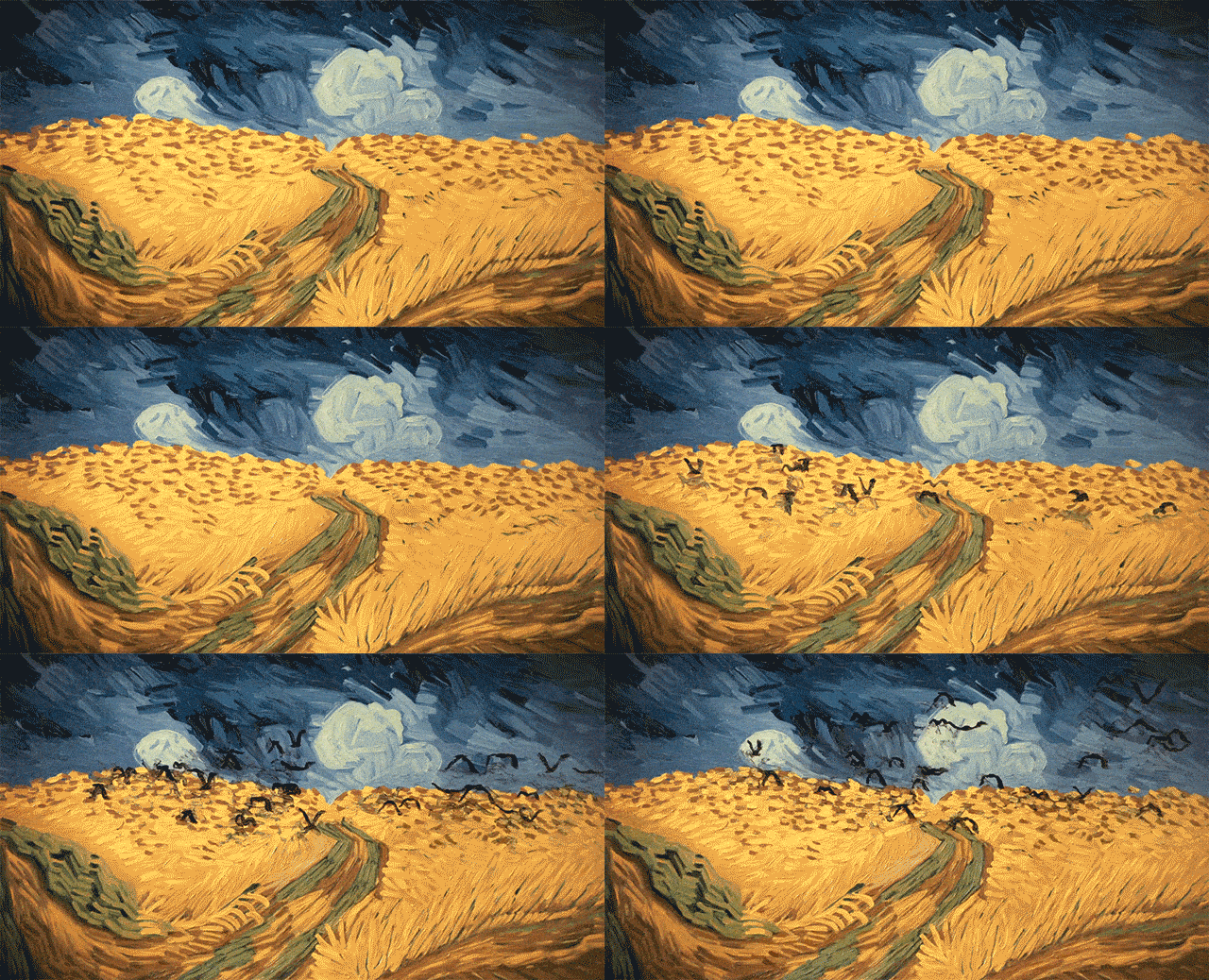
Here, we first need to clarify a concept – fine arts. Fine arts include painting, sculpture, crafts, and architecture. Children’s fine arts education is an effective way to develop children’s intelligence and potential, improve children’s observational skills, memory, imagination, creativity, and expression, and cultivate children’s noble aesthetic interest, and sound personality. Children’s fine arts education is a necessary step on the road to logical cognition, and it has an inseparable relationship with the inheritance of art and culture. Carrying out children’s fine arts education is the need for children’s growth and an important part of a complete individual education.
这里首先要明确一个概念——美术。美术包括绘画、雕塑、工艺美术与建筑。儿童美术教育是开发儿童智力及潜能,提高儿童的观察能力、记忆能力、想象能力、创造能力及表现能力,培养儿童高尚的审美情趣,健全人格的有效途径。儿童美术教育是通往逻辑认识道路上必不可少的阶梯,它与艺术文化的传承有着不可分割的关系。开展儿童美术教育,是儿童成长的需求,是作为个体完整教育中重要的组成部分。
Currently, in traditional children’s fine arts education, there are many shortcomings or misunderstandings in both teachers’ teaching and parents’ awareness.
目前,再传统儿童美术教育过程中,无论是教师教学,还是家长意识,都存在着诸多弊病或误区。
For example, the misconception of the purpose of learning fine arts: This is a key issue. Many parents think that learning fine arts is just letting children draw and master more skills so that they won’t fall behind others in future social competition, or become famous and successful when they grow up. (This includes blind conformity, vanity-driven factors, and unrealistic goal-setting by parents)
譬如学习美术目的的认识误区:这是一个关键的问题。有许多家长认为,学习美术就是让孩子画画,就是让孩子能多掌握一门技能,以便在未来的社会竞争中不落后于他人,或长大后让孩子成名成家。(这其中有盲目跟风的因素,有虚荣心的驱使,更有家长不切实情的目标设定)
For example, the misconception of choosing learning content: Many parents send their children to “sketching classes,” “cartoon classes,” or “traditional Chinese painting classes” at a young age, without discretion or scrutiny, thinking that children mastering certain drawing skills is “learning fine arts”.
譬如学习内容选择上的误区:有许多家长把孩子早早地送到“素描班”、“动漫班”、“国画班”等,不加甄别和考究,貌似孩子掌握了某些绘画技能技巧就是在“学美术”。
For instance, the misconception of evaluation: “Your drawing is too realistic!” (praise) “Look at the mess you’ve made! Do you think you’re Picasso?!” (ridicule) “What have you drawn? You’re just creating visual garbage!” (rebuke) This method of evaluating children’s works based on inherent adult standards is unaware of the impact it will have on children!
再譬如评价的误区:“你画得太像了!”(赞美)“瞧,画得乱七八糟!你以为你是毕加索啊?!”(嘲讽)“你画了个啥?!”“又在制造视觉垃圾!”(斥责)这种以成人固有的标准去衡量、评价孩子作品的方式,殊不知对孩子将会产生怎样的影响!
It’s also at this stage of childhood that we hear children’s frustrated and helpless voices: “I can’t draw anymore,” “I don’t like drawing anymore!” or even “I hate drawing!” While there are factors such as individual differences in children’s innate talents, increasing academic burdens, and shifting interests as they grow up, more confusion arises from the influence of objective environmental factors, often problems in teaching and learning.
也正是在儿童这个阶段,我们也听到了孩子沮丧、无奈的心声:“我不会画了”,“我不爱画了!”甚至说“我讨厌画画”!无怪乎这其中有儿童个体天赋差异的内因,也有随着年龄增长,学业负担加重,兴趣转移的外因,但更多的困扰来自于客观环境的影响,多是教与学中的出现了问题。
Children’s fine arts education has the characteristics of comprehensive and diversified learning. Children have their aesthetic perception, aesthetic imagination, and aesthetic emotional experience. As teachers or parents, we must be adept at reflecting, comprehending, and clarifying our understanding amid this in-depth understanding.
儿童美术教育具有综合性、多元化学习的特征,儿童有其自身的审美感知,审美想像与审美情感体验。做为教师抑或家长,我们要善于去反思,去悟,并能在这深入的悟中去明确我们的认识。
So, when discussing children’s aesthetic education norms and healthy development today, we must not only change the single-faceted understanding of aesthetic education but also focus on the humanistic connotation of aesthetic education and the mental growth needs behind it. Because children’s aesthetic education is more than just applying some colors or creating sketches, it enables children to experience spiritual refinement in their appreciation of beauty, achieve harmony between their physical and mental well-being and artistic environment, affecting children’s concepts of beauty, artistic cultivation, and moral qualities, allowing them to go further and happier in their future lives.
如今我们思考儿童美育启蒙时,不仅要改变单一化的美育认识,更应关注美育的人文内涵以及美育背后心灵成长的需要。因为,儿童美育不仅是涂得几笔颜料、画得一些素描,它能使儿童在美的感受中获得精神上的陶冶,实现身心与艺术环境的协调,影响儿童的美丑观念、艺术修养和道德情操,从而使其在未来的人生中走得更远、更幸福。
Therefore, when discussing the issue of norms and healthy development in children’s aesthetic education enlightenment today, we should avoid using adult thinking or professional techniques to judge children’s artistic activities and learning outcomes, incorporate children’s aesthetic education into a teaching system suitable for their psychological age development, starting from respecting children’s nature, optimizing children’s aesthetic education evaluation methods, and updating the educational philosophy and methods of children’s aesthetic education.
因此,当我们今天讨论儿童启蒙美育规范与健全发展的问题时,要避免以成年人的思维或专业化的技巧评判儿童的艺术活动和学习成果,将儿童美育纳入适合儿童心理年龄发展的教学体系,从尊重儿童天性出发,优化儿童美育的评价方式,更新儿童美育的教育理念与方法。
Early in the last century, Chen Heqin, a pioneer in the study of children’s aesthetic and psychological development in China, divided children’s drawings into different stages according to their ages: the scribbling stage (1-2 years), the symbolic stage (2-3 years), the stereotypical stage (3-8 years), and the realism stage (after 8 years). These stages reflect the psychological characteristics and drawing abilities of children at different developmental stages. This means that children’s thinking abilities are not static or unchanging, but developing and evolving. Children’s perspectives on observing the world and their self-awareness are in a gradual process of improvement. Compared with the inherent rational thinking patterns of adults, children have richer and more colorful imaginations and unexpected creativity.
早在上个世纪,中国儿童审美心理发展研究的开拓者陈鹤琴就按照儿童的年龄顺序把儿童绘画分为不同阶段:涂鸦期(1-2岁)、象征期(2-3岁)、定型期(3-8岁)、写实期(8岁以后),不同的年龄特征反映出儿童在不同发展阶段的心理特点和绘画能力。也就是说,儿童的思维能力不是静止、不变的,而是发展的、变化的,儿童观察世界的角度和对自我的认知方式处于逐渐完善的过程中。相对于成年人固有的理性思维模式,孩子们拥有更加丰富多彩的想象力和意想不到的创造力。
2 – 3 years – Exploratory Stage
Stimulate children’s perception
Learn to recognize primary colors
Apply colors in designated areas
Recognize shapes
Combine simple shapes for collage
2 – 3岁 —— 探索阶段
打开孩子的感知力
学习纯色的认知
在指定区域涂色
形状的认知
简单的形状组合拼贴
3 – 4 years – Trial Stage
Foster the development of creativity and perception
Cultivate observational skills for graphic generalization
Learn to recognize the primary colors and professional terms for hues
Practice blending two colors
Transition from unconscious scribbling to conscious scribbling
3 – 4岁 —— 尝试阶段
激发孩子的创造力和感知力的萌发
培养图形概括的观察能力
认知三原色及颜色的专业名词
练习两种颜色的调和
从无意识涂鸦过渡到有意识涂鸦
4 – 5 years – Expression Stage
Further enhance creativity, perception, and discernment
Communicate the concept of space
Distinguish between foreground and background sizes
Recognize complementary colors and apply them in drawings
Learn to draw simple figures and facial features
Begin foundational learning in Chinese painting
4 – 5岁 —— 表达阶段
进一步培养孩子的创造力 感知力 见解力
传达“空间的概念”
能够区分前后大小
认识补色并运用到画面之中
学会绘画简单人物形象和人物五官的刻画
开始国画的基础学习
5 – 6 years – Practical Stage
Improve perception, creativity, discernment, and perspective abilities
Study composition skills: density and overlapping relationships
Develop design skills: basic elements of dots, lines, and surfaces
Enhance shaping skills: increase sketching and imitation
Distinguish between warm and cool colors and color gradations
Introduce oil painting, learn painting techniques and brushstroke applications
5 – 6岁 —— 实践阶段
提升孩子的感知力 创造力 见解力以及视角力
学习构图能力:疏密和遮挡关系
学习画面装饰能力:点线面的基本元素
造型能力的提升:增加写生和临摹
区分冷暖色和渐变的色彩以及三间色
初步涉猎油画,学习油画的绘画方法以及笔触运用
6 – 7 years – Foundation Stage
Focus on cultivating aesthetic and beautification abilities
Learn modeling skills in sketching
Understand the concept of three-dimensional objects
Study color harmony and mixing techniques
Apply color wheel theory using the three primary colors
Practice complementary color relationships
Improve composition and decorative skills for drawings
Utilize black, white, and gray in dots, lines, and surfaces
Begin specialized courses in Chinese painting and oil painting
Introduce basic sketching techniques
6 – 7岁 —— 基础阶段
重点培养孩子的审美和美化能力
学习默画的造型能力
了解物体的立体概念
学习调和复色
运用三原色调出色相环
熟练运用补色关系
提升画面的构图和装饰能力
点线面的黑白灰运用
国画和油画专业课的阶段学习
简单涉猎素描
7 – 8 years – Professional Primary Stage
Comprehensive training in visual, discerning, creative, and beautification abilities
Master the three elements of color: hue, purity, and brightness
Integrate professional courses with Idea courses
Emphasize scene construction in drawings
Study plane composition and color composition in design courses, and perform stylish color matching
Recognize unique artistic styles and famous artists
7 – 8岁 —— 专业初级阶段
全面培养孩子的视觉力 见解力 创造力 和 美化力
掌握色彩三要素:色相 纯度 明度
穿插专业课程和Idea课程
注重画面中场景建设
设计课中平面构成和色彩构成,并进行有风格的色彩搭配
认识具体独特绘画风格的艺术大师
8 – 10 years – Practical Stage
Emphasize unique discernment and visual abilities
Refine perception, beautification, and shaping abilities
Intentionally handle spatial relationships and depth in drawings
Reinforce the relationship between inherent object colors and sketching
Increase technique and art appreciation learning
Briefly introduce art history
Familiarize with key art movements and their representative figures and works
8 – 10 岁 —— 实践阶段
重点培养孩子独特的见解力 视觉力
提高细腻的感知力,美化能力以及造型能力
有意识的处理画面空间关系和虚实关系
强化物体的固有色和素描关系
增加技法和鉴赏的学习
简单了解艺术史
熟悉重点流派的代表人物及代表作品
10 – 14 years – Professional Advanced Stage
Cultivate comprehensive artistic expression abilities
Strengthen independent thinking abilities
Skillfully apply various drawing media
Understand the development of art history
Independently discuss favorite artists
Focus on sketching, oil painting, and Chinese painting, supplemented by Idea courses and specialized courses
Emphasize learning human figure structure and proportions, as well as structural practice
10 – 14岁 —— 专业高级阶段
培养孩子艺术表达的综合能力
加强独立的思考能力
不同绘画媒介的熟练运用
了解美术史的发展脉络
独立讲述自己喜欢的艺术家
素描 油画 国画为主,穿插Idea课程 特色课程
着重学习人物绘画物管结构
人物比例 形态 结构的练习
Compared to professional art education, children’s art education is less about artistic training and more about an enlightening game revolving around art. Children’s enlightening art education must be built upon a child’s natural disposition, and games are the most common form of activity during childhood. The famous educator Montessori once said: “A child’s entire life is a game,” and children begin their learning journey through play. The primary mode of learning for children is “play”; they think, verify, create, and absorb knowledge through games. They understand and adapt to the world around them through games. Playing lays the foundation for developing children’s early comprehensive qualities, such as thinking, emotion, and social behavior.
与专业美术教育相比,儿童美育与其说是艺术训练,不如说是一个围绕艺术而进行的启蒙游戏。儿童启蒙美育要建立在孩子的自然天性之上,而游戏是儿童阶段最普遍的活动方式,著名教育家马卡连柯曾说:“儿童的整个生活是游戏”,儿童正是在游戏中儿童开始了学习。儿童学习的主要方式是“玩”,游戏是他们思考、验证、创造、吸取知识的方式,是他们理解并适应周围世界的方式,游戏为孩子思维、情感、社会行为等早期综合素质的发展奠定了基础。
When we focus on the artistic process in children’s art education and emphasize perception, experience, and interaction in the art process, children’s art education moves from the limitations of techniques and skills to the values of thought, culture, and emotion inherent in these techniques and skills. This promotes the development of children’s comprehensive aesthetic abilities.
当我们把儿童美育的重心放在艺术过程中时,放在参与艺术过程中的感知、体验与互动中时,儿童美育将从技能与技法的局限中,迈向技法技能背后所蕴含的思想、文化与情感的价值,从而促进儿童审美综合能力的提升。
In the process of aesthetic education for children, students should not only acquire various forms of knowledge and skills but also internalize the thinking, behavior, and attitudes of this process into their own mindset, altering their cognitive processes, behavioral habits, and thought patterns. This way, they can obtain the ability to perceive, appreciate, imagine, and create beauty while establishing correct aesthetic awareness, fostering healthy aesthetic interests, enhancing cultural cultivation, and forming an elegant outlook on life.
在儿童审美教育过程中,学生不仅要习得种种知识与技能,更要将此过程中的思维、行为和态度内化到自身思维观念之中,改变自己的认知方式、行为习惯和思维模式,从而获得感受美、鉴赏美、想象美、创造美的能力,同时需树立正确的审美意识,养成健康的审美情趣,提升文化修养并形成高尚的人生观。
Renowned writer Long Yingtai once told a story of a five-year-old boy selling roses in her book “Child, You Take Your Time.” As the boy clumsily wrapped the roses again and again, the author wrote:
著名作家龙应台在《孩子,你慢慢来》中曾讲述一个五岁小男孩卖玫瑰花的故事。当这个五岁的小男孩笨拙地包扎一束玫瑰,一遍遍重来的时候,作者这样写道:
“I sat on the stone steps bathed in gentle sunlight, watching this bright-eyed boy focus on his task; indeed, I would gladly wait a lifetime for him to leisurely finish tying the butterfly knot with his five-year-old fingers. Child, you take your time, take your time.”
“我,坐在斜阳浅照的石阶上,望着这个眼睛清亮的小孩专心地做一件事;是的,我愿意等上一辈子的时间,让他从从容容地把那个蝴蝶结扎好,用他五岁的手指。孩子你慢慢来,慢慢来。”
When “slow life” becomes modern people’s inner yearning, “slow education” should also become a new educational value concept. For a child’s growth, the most appropriate approach is to patiently wait with a calm and nurturing attitude. We cannot be impatient, nor can we take shortcuts because life is a process.
当“慢生活”成为现代人的内心向往,“慢教育”也应成为新的教育价值观念。对于孩子的成长,我们最应做的就是慢慢等待,用一种静静等待的心态去呵护,不能着急,更无法代劳,因为这才是生命的过程。
Enlightening art education for children is related to the development of children’s artistic aesthetic abilities and their life values. It needs to be nurtured from a young age, inspired from the very beginning. As early as the 18th century, Rousseau said in a book on children’s education called “Emile”: “Education begins with our lives.”
儿童启蒙美育关系着儿童艺术审美能力和人生价值观念的养成,需要从小濡染,从小启迪。早在18世纪,卢梭就在一本针对儿童教育的书《爱弥儿》中说过:“教育是同我们的生命一起开始的。”
Children’s art education is not “taught” but is “immersed” during the art process. It is a long-term “cultivation” that arises from prolonged, tolerant, open, and diverse art processes and scenes. Therefore, we say that understanding art may take a lifetime, but loving and appreciating art begins in childhood!
儿童美育不是“教”出来的,而是在艺术过程之中“浸润”出来的,是长时间的“育”化,是在长期宽容的、开放的、丰富多彩的艺术过程与活动场景中熏陶出来的。因此,我们说,懂得艺术,也许需要用一生,但爱慕艺术,却起始于童年!


